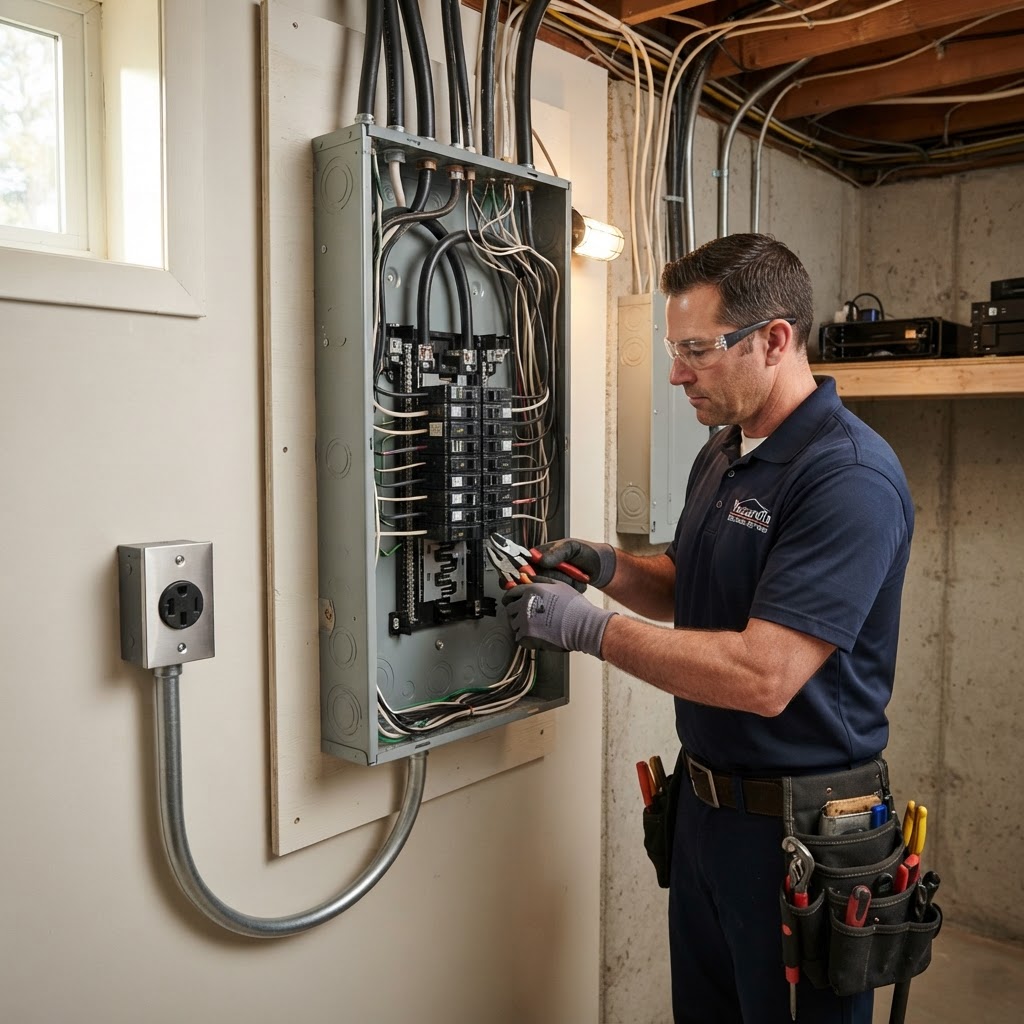
Is your electrical panel overloaded? Discover the common signs, causes, and how Vaccarella Electrical Services can help upgrade your home’s power capacity in Bergen County.
What Causes an Electrical Panel to Become Overloaded?
An electrical panel becomes overloaded when the total demand for power from the devices and appliances in your home exceeds the maximum amperage the panel was designed to handle. In many older homes across Northern New Jersey, panels were sized for the 1960s or 70s, not for today's high-demand lifestyle.
The Role of Modern Electrical Demand
Today’s Bergen County households operate differently than those of the past. From high-speed internet hubs and home offices in towns like Ridgewood and Franklin Lakes to the growing adoption of EV chargers in Paramus and Englewood, the strain on residential infrastructure is significant. When you add heavy-duty appliances like central air conditioning, electric heat pumps, and high-speed Level 2 EV charging stations, your main breaker may trip frequently as a safety measure.
Common Indicators of an Overloaded Panel
- Frequent circuit breaker trips that require resetting.
- Lights that flicker or dim when major appliances, such as a refrigerator or HVAC unit, cycle on.
- Visible signs of heat or melting around the breaker panel or wall outlets.
- A persistent burning smell near the service entrance.
- The inability to install new appliances or an EV charger without a system upgrade.
Why Northern New Jersey Homes Need Upgrades
Many homes in Teaneck, Fairlawn, and Mahwah feature aging electrical infrastructure. If your home still operates on a 100-amp service, it may not meet current National Electrical Code (NEC) standards for modern living. Upgrading to 200-amp service is often the necessary step to accommodate the load requirements of a dedicated Level 2 EV charging circuit, which typically requires 40 to 60 amps of continuous power.
Professional Safety and Compliance
Attempting to bypass safety triggers or ignoring signs of overload is a significant fire risk. As a licensed New Jersey electrical contractor (NJ License #16628), Vaccarella Electrical Services performs precise load calculations to determine if your panel can support new electrical demands. We navigate local permitting across Bergen County to ensure that your electrical service upgrade meets all safety codes, providing you with a reliable, future-proof system.
Take the Next Step with Vaccarella Electrical
Whether you are preparing for a new electric vehicle or simply upgrading an aging home, our team is here to help. Don't wait for a total power failure to address your panel’s capacity. Contact Vaccarella Electrical Services at (201) 966-0019 or request a free quote through our website contact form today to schedule an assessment.
Frequently Asked Questions
1. What is an electrical panel upgrade? It is the process of replacing an outdated panel with a higher amperage capacity, such as moving from 100-amp to 200-amp service.
2. Can I install an EV charger on an old panel? Often, an older panel lacks the space or capacity; a load calculation by a licensed professional is required first.
3. How do I know if my panel is overloaded? Frequent breaker tripping and flickering lights are primary warning signs.
4. Is a permit required for panel upgrades in Bergen County? Yes, most municipalities in Northern New Jersey require permits and inspections for major electrical work.
5. What is the difference between a sub-panel and a main panel? A main panel controls the whole house, while a sub-panel distributes power to a specific section.
6. How long does a service upgrade take? It typically takes one full day, including coordination with your utility company.
7. Why should I choose a licensed contractor? Electrical work requires adherence to strict safety codes to prevent fires and ensure insurance compliance.
Glossary of Terms
Amperage (Amps): The unit of measurement for the flow of electrical current.
Breaker: A safety switch that cuts power to a circuit if an overload is detected.
Dedicated Circuit: An electrical line designed specifically for one high-power appliance.
Load Calculation: A professional assessment of the total electricity a home consumes.
NEC (National Electrical Code): The standard benchmark for safe electrical design.
Service Entrance: The point where utility power enters your home.
Volt: The unit of electrical pressure.