Is your home in Northern New Jersey struggling to keep up with modern energy demands? Learn the warning signs of an overloaded electrical system and when it's time for a service upgrade.
Understanding Electrical Overload in Bergen County Homes
Many homeowners in Northern New Jersey reside in charming, historic housing stock. While these homes offer character, their original electrical systems were often designed for a time before high-powered HVAC units, smart home technology, and the growing necessity of EV charging stations. An overloaded electrical system occurs when you draw more power than your panel or circuits are safely designed to provide.
Common Warning Signs of an Overloaded System
If you notice the following signs, your home may be pushing its electrical limits:
- Frequent Breaker Trips: If your circuit breaker trips consistently, especially when using high-demand appliances, it is a clear indicator that the circuit is overloaded.
- Flickering or Dimming Lights: Lights that dim when you turn on the microwave or hair dryer suggest a voltage drop caused by excessive demand.
- Buzzing Sounds: Any buzzing or humming coming from your electrical panel or outlets is a serious safety concern that requires immediate inspection.
- Warm Outlets or Switches: Outlets that feel hot to the touch can indicate loose wiring or an overloaded circuit.
- Burning Smells: This is an emergency situation indicating wires may be melting behind your walls. Turn off the main power and call an electrician immediately.
The Impact of EV Charging on Your Electrical Capacity
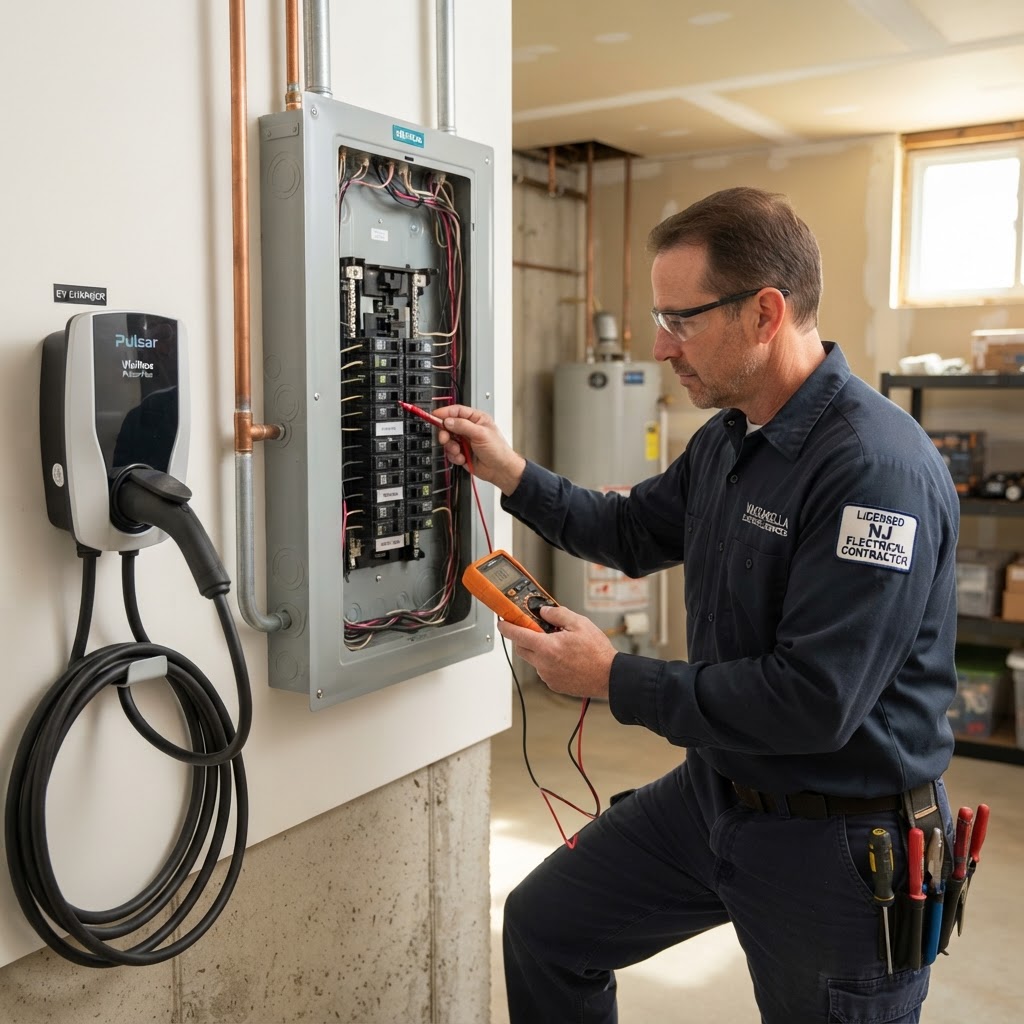
With more residents in towns like Paramus, Ridgewood, and Franklin Lakes transitioning to electric vehicles, the demand on residential electrical service has increased. A Level 2 EV charger requires a dedicated, high-amperage circuit. If your home still utilizes an outdated 100-amp service, adding an EV charger can easily exceed your panel capacity. A licensed electrician must perform a professional load calculation to determine if your current service can safely support an EV charger installation without requiring a panel upgrade.
Why Service Panel Upgrades Are Essential
Many homes in Bergen County still operate on 100-amp service, whereas modern standards often recommend 200-amp service for households with central air, hot tubs, and EV chargers. Upgrading your service panel ensures your home meets current safety codes, reduces fire risks, and provides the capacity needed for future-proofing.
Local Expertise: Vaccarella Electrical Services
At Vaccarella Electrical Services (NJ License #16628), we specialize in helping Northern New Jersey residents assess their electrical needs. From Fairlawn to Mahwah, Englewood to Teaneck, we provide professional evaluations to ensure your system is safe, efficient, and up to code. Whether you need a simple circuit installation or a total panel upgrade, we are your local experts.
Request Your Free Quote
Don't wait for an electrical emergency. If you suspect your system is overloaded or are planning to install an EV charger, contact us today. Visit our website to request a free quote, or call us at (201) 966-0019 to speak with a licensed professional.
Frequently Asked Questions
- Q: What is a load calculation? A: It is an assessment performed by an electrician to determine the total wattage requirements of all your home's electrical appliances to see if your panel can handle the load.
- Q: How do I know if I need a 200-amp service? A: If you frequently trip breakers when running common appliances, or if you are planning to add an EV charger, a 200-amp service upgrade is often necessary.
- Q: Are electrical permits required in NJ? A: Yes, electrical work in New Jersey municipalities requires permits and inspections to ensure compliance with local and state building codes.
- Q: Why does my light flicker when the AC turns on? A: This usually indicates an voltage drop caused by the startup demand of the AC unit, which may signal that your electrical service is near capacity.
- Q: Is my home's wiring dangerous? A: If your home has old knob-and-tube or aluminum wiring, it may present specific hazards. A licensed electrician can inspect your wiring for safety.
- Q: Can I install an EV charger myself? A: No. EV charger installation involves high-voltage wiring and must be performed by a licensed and insured electrician to meet safety standards.
Glossary of Electrical Terms
Amperage (Amps): The unit of measurement for electrical current flow. Breaker: A safety device that automatically shuts off power when a circuit is overloaded. Circuit: The path electricity travels from the panel to your outlets and devices. Dedicated Circuit: A circuit dedicated to a single appliance to prevent overloading. Level 2 Charging: The standard for residential EV charging, typically requiring a 240-volt circuit. Load Calculation: A calculation to determine the maximum electrical demand a home requires. Panel Upgrade: Replacing an existing electrical panel to increase the total capacity (amps). Voltage: The electrical pressure that pushes current through the circuit.