Deciding between a hardwired or plug-in EV charger for your Northern New Jersey home? Discover which option offers the best safety, reliability, and efficiency for your vehicle.
The Short Answer: Which Charger Should You Choose?
For most homeowners in Northern New Jersey, hardwired EV chargers are the superior choice. While plug-in chargers offer portability, hardwiring provides a safer, more permanent connection that reduces wear and tear on your electrical system—a critical consideration for older homes in towns like Ridgewood or Teaneck.
Understanding Your Options: Plug-In vs. Hardwired
When installing a Level 2 charger, you generally have two installation methods:
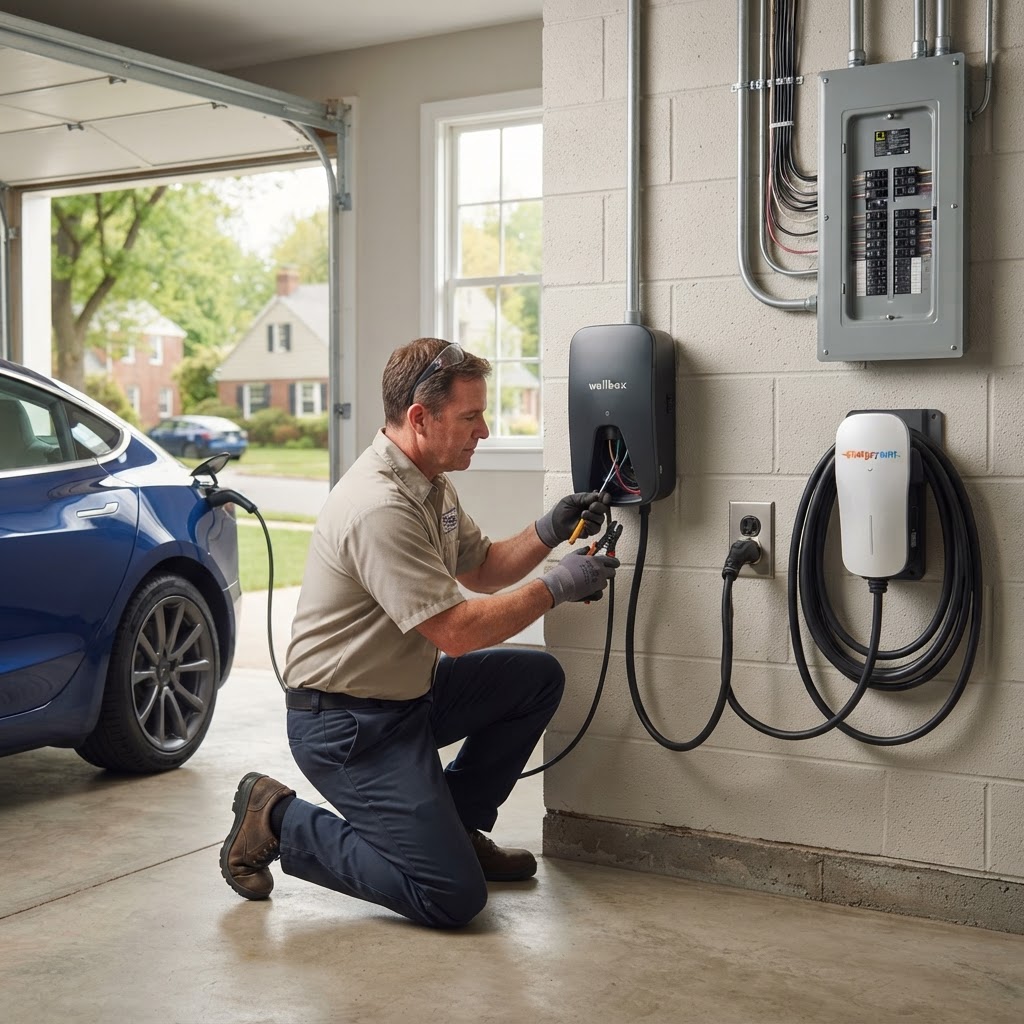
- Plug-in (NEMA 14-50): Uses a high-voltage outlet, similar to a dryer outlet. This allows you to unplug your charger if you move or want to replace the unit easily.
- Hardwired: The charger is connected directly to your electrical panel through a conduit. There is no plug or outlet involved.
The Safety Benefits of Hardwired Installation
In Bergen County, we see many homes with aging electrical infrastructure. A plug-in connection introduces a potential point of failure: the outlet itself. High-amperage charging generates significant heat. If a NEMA outlet isn't industrial-grade or is installed improperly, it can melt or cause connection issues. Hardwiring eliminates the outlet entirely, removing this common failure point.
When a Plug-In Charger Makes Sense
If you anticipate moving in the near future or plan to upgrade your charging unit frequently as technology evolves, a plug-in model provides flexibility. However, it requires a high-quality, heavy-duty receptacle installed by a licensed professional to ensure safety.
Electrical Capacity and Your Service Panel
Installing an EV charger is a major electrical load. Before starting, you need a load calculation to determine if your panel can handle the addition. Many homes in areas like Paramus, Mahwah, and Franklin Lakes are still running on 100-amp service, which may be insufficient for a modern Level 2 charger and other household demands. Vaccarella Electrical Services (NJ License #16628) frequently performs service panel upgrades to 200-amp to accommodate these modern electrical needs safely.
The Importance of Local Expertise in Northern New Jersey
Electrical codes and permitting requirements vary by municipality across Northern New Jersey. Whether you are in Englewood, Fairlawn, or Hackensack, your installation must comply with the National Electrical Code (NEC) and local town ordinances. Attempting a DIY installation or hiring an unlicensed contractor is a risk you shouldn't take. We ensure all work is permitted, inspected, and held to the highest safety standards.
Schedule Your EV Charger Installation Today
Ready to upgrade your home for your electric vehicle? Vaccarella Electrical Services is your trusted local partner for safe, professional EV charger installation in Bergen County. Call us at (201) 966-0019 or request a free quote through our website contact form to get started.
Frequently Asked Questions
Q: Can I install my own EV charger?
A: We strongly advise against DIY installation. EV charging involves high voltage and requires professional expertise to meet local codes.
Q: Do I need a permit for an EV charger?
A: Yes, almost all municipalities in Northern New Jersey require electrical permits and inspections for EV charger installations.
Q: Will an EV charger increase my electric bill?
A: Yes, adding an EV will increase your electricity usage, though it is significantly cheaper than gasoline costs.
Q: Can I use a standard 120V outlet?
A: You can, but this is Level 1 charging, which is extremely slow. Level 2 is recommended for most drivers.
Q: What is the benefit of a 200-amp upgrade?
A: It allows your home to support more simultaneous high-load devices, such as EV chargers, central AC, and generators.
Q: Does my charger need to be weather-rated?
A: If installed outdoors, your charger must be NEMA 3R rated or higher for weather protection.
Q: How long does installation take?
A: Most installations are completed in one day, though site conditions vary.
Glossary of Terms
Level 2 Charging: 240-volt charging, the standard for residential homes.
NEMA 14-50: A common 240-volt outlet used for many EV plug-in chargers.
Load Calculation: An assessment to determine if your electrical panel can support additional power demands.
Service Panel: The main "breaker box" that distributes electricity throughout your home.
Hardwired: A permanent electrical connection made directly into the charger.
NEC: The National Electrical Code, the standard for safe electrical design.
Conduit: Protective tubing used to house electrical wiring.