Is your electrical panel holding you back? Learn the differences between 100-amp and 200-amp services and why an upgrade is essential for modern Bergen County homes.
Understanding Your Home’s Electrical Capacity
In short, most modern Northern New Jersey homes require a 200-amp electrical service to safely handle today's power demands, especially if you are installing a Level 2 electric vehicle (EV) charger. While 100-amp service was the standard for decades, the increase in smart appliances, central air conditioning, and EV adoption has made 200-amp service the new gold standard for residential safety and efficiency.
Why Bergen County Homes Are Outgrowing 100-Amp Service
Bergen County features a mix of historic homes and post-war suburban developments. Many of these properties were originally wired for far less electricity than we use today. When you add a modern kitchen renovation, a home office, or an EV charging station, you risk overloading a 100-amp panel. Common signs your panel is struggling include flickering lights, frequently tripped breakers, or appliances that lose power when the HVAC kicks on.
The EV Charging Factor
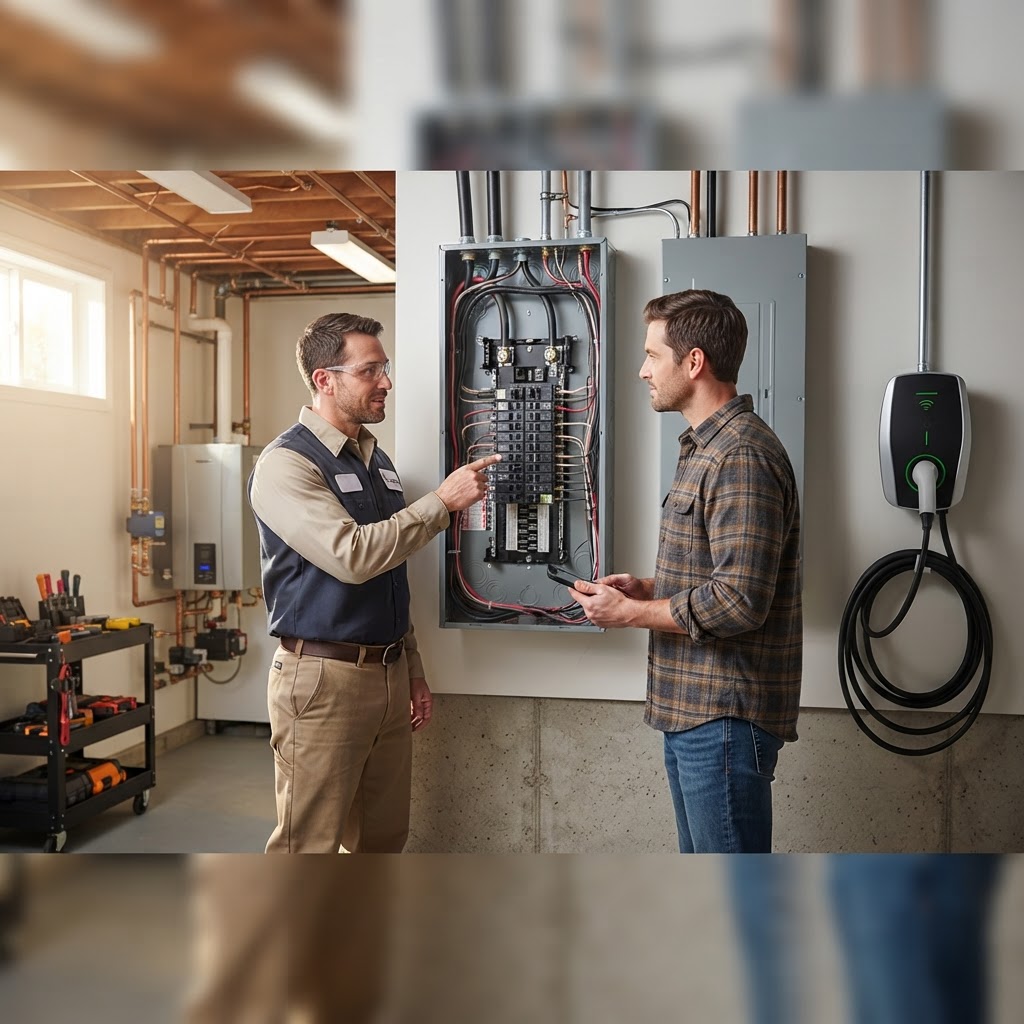
Installing a Level 2 EV charger is one of the most common reasons residents in towns like Ridgewood, Franklin Lakes, and Paramus contact Vaccarella Electrical Services for a panel upgrade. An EV charger is a heavy load. If your current service is maxed out, you cannot simply "add" a charger without risking a fire hazard or consistent power failures. A 200-amp service provides the necessary headroom to charge your vehicle while running your home’s essential systems.
Key Differences: 100-Amp vs 200-Amp Service
- 100-Amp Service: Often found in older homes. Sufficient for small dwellings with gas appliances and limited electrical demand.
- 200-Amp Service: The modern standard. Necessary for homes with central AC, electric heat, large kitchens, home workshops, and EV charging stations.
The Process: Upgrading Your Electrical System
Upgrading your service involves more than just swapping a box. It requires an assessment of your home’s load, obtaining local permits from your municipality—such as Teaneck, Hackensack, or Mahwah—and ensuring all work meets current NEC (National Electrical Code) standards. Vaccarella Electrical Services (NJ Electrical Contractor #16628) manages this process from start to finish to ensure your home is compliant, bonded, and safe.
Schedule Your Upgrade Today
Don't let an outdated electrical panel limit your home's potential. If you are planning to install an EV charger or renovate your kitchen, contact the experts at Vaccarella Electrical Services. Call us at (201) 966-0019 or visit our website to request a free quote for your electrical service upgrade in Northern New Jersey.
Frequently Asked Questions
- How do I know if I have 100-amp or 200-amp service? You can usually check your main breaker. If it is labeled 100, you have 100-amp service.
- Does a 200-amp upgrade lower my electric bill? No, but it makes your electrical system more efficient and prevents damage from surges or overloads.
- Can I install an EV charger on a 100-amp panel? It depends on your current load, but it is rarely recommended. A professional load calculation is required.
- How long does a service upgrade take? Most residential upgrades can be completed in a single day.
- Are permits required? Yes, all major electrical service upgrades require municipal permits and inspections.
- Is my home safe if I don't upgrade? If your system is overloaded, it presents a fire risk. Regular inspections are recommended.
- Does Vaccarella Electric handle the utility company coordination? Yes, we coordinate with your utility provider regarding the service drop and meter requirements.
Glossary of Terms
Ampere (Amp): The unit used to measure the rate of electrical current flow. Breaker Panel: The main hub for your home’s electricity that holds circuit breakers. Level 2 Charging: 240-volt charging, standard for residential EV stations. Load Calculation: A professional analysis of how much power your home consumes. NEC: The National Electrical Code, the standard for safe electrical design in the US.